Those of you who know me well enough through Twitter, Facebook, the old webcast project, and even real life already know that I've started hosting and producing a podcast called VCinema which has a blog presence as well. Though I fully intend to keep this blog running for more personal stuff, I'd highly recommend you keep an eye on VCinema as well because, if you are an Asian and especially Japanese film fan, you are really going to enjoy the projects we are working on. We already have five episodes of the podcast out including reviews of Riki-Oh: The Story, Tetsuo, Shinjuku Triad Society, and more along with plenty of stupid and serious movie talk. We've also had an interview with Tokyoscope/Otaku USA Editor-in-Chief Patrick Macias and an upcoming one with Tokyo Vice author Jake Adelstein and many more planned.
Again, I will still post here intermittently - I still have a book/film adaptation double review of Ryu Murakami's "Almost Transparent Blue" coming down the pike, for example - but I hope you join us over at VCinema as well. By the way, besides the main site, we're also on iTunes (as "VCinema").
Thanks!
Friday, March 26, 2010


Tuesday, January 5, 2010
Review: Hear the Wind Sing (book: 1979; movie: 1980)

Author: Haruki Murakami; Director: Kazuki Omori
Must be difficult to be asked to write and direct the film adaptation of a novella which had already won a prestigious Gunzo literary award. Then again, director Kazuki Omori, who would go on to direct Godzilla in two Heisei-era romps (vs. Biollante in ‘89 and vs. King Ghidorah in ‘91), would not know that he would be handling the debut work of an author who would later win several prizes and be dubbed “among the world's greatest living novelists” among other accolades. He would however know what a task it would be to write and adapt a book essentially about nothing.
To be fair, Haruki Murakami (The Wind-Up Bird Chronicle, Norwegian Wood) didn’t write his book about the same nothing as Seinfeld’s. Rather, Hear the Wind Sing is a pastiche of characters who seemingly wander from one in-novel set piece to the next, interacting with each other as if delivering monologue. This quiet-cool, hard boiled style has earned Murakami accolades as well as criticisms from those who accuse him of being a stylistic one trick pony.
The novella feels like it could have been at least partially autobiographical for Murakami in 1979. It essentially follows a nameless protagonist’s return to his hometown during a break from school. Within in the narrative are scenes and ruminations on relationships, music (jazz and rock and roll), beer, cigarettes, class inequality, french fries, and pinball. Hear the Wind Sing feels aimless but at the same time fits a post-modern “going nowhere but looking good while doing so” aesthetic.
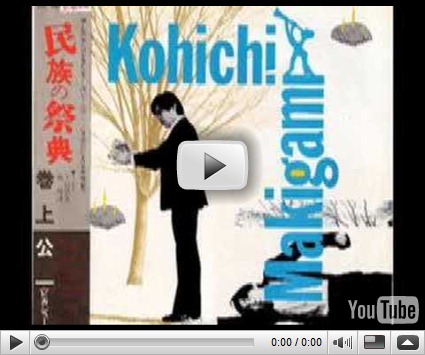
The movie Hear the Wind Sing then is an attempt to ride that aesthetic visually. At first, the cast don’t seem up to the task of replicating their text counterparts. Kaoru Kobayashi, normally an excellent actor, looks rather nebbish for the part and narrates Murakami’s prose rather woodenly. Kimie Shingyoji, who resembles a younger, more beautiful Eihi Shiina (Audition, Tokyo Gore Police), plays her character, a recurring woman in the narrator’s short return home, seemingly with ice running through her veins. Koichi Makigami, a highly talented musician and vocalist (see YouTube clip below), certainly looks the part of his character (named “The Rat”) with his rodent-like wide cheeks and squinty features but hardly emanates the coolness of a Murakami character.
Director Omori, who also wrote the screenplay, however, did try to create visuals which matched the quirkiness of the novella. There are several sepia-toned and black and white flashbacks, stock clips of ‘60s Japanese student movement riots, a funny and surreal film-within-the-film sequence, and even animation scenes that reflect the novella’s sometimes patch-work like construction. While interesting, the shifts can sometimes feel jarring and sometimes add unnecessary visual noise. Somewhere along the way, however, Omori manages to put both disparate elements in his film together and make them work. It can be said that some novels but especially Murakami’s have to exist in their own worlds. The casting and stylistic issues seem at first like missteps because they feel too much a part of a movie world and not Murakami’s world, a shift that does not occur until halfway through. If Omori had been able to figure out how to start in Murakami’s world earlier, the movie would have worked better but once the first chords of “California Girls”, a recurring piece on the soundtrack (which has an eclectic mix of bop, free jazz, early electronic music, and rock), kick in for the first time then we know Omori has made the shift.
Murakami’s work has been likened to music (c.f. Haruki Murakami and the Music of Words by Jay Rubin) not surprisingly considering he constantly references musicians, primarily western ones, in his stories. Stylistically, as any musician can tell you, what’s not played is as important as what is played. A drumbeat, for example, is typically definable by the space between beats as much as the beats themselves. Murakami’s style very much fits this metaphor in that he gives the reader just enough to be able to fill in any spaces left empty in the narrative. That Omori could take this style and make a good film out of it is a feat akin to making something out of nothing.
Hear the Wind Sing, the novella, was never released outside of Japan. An English-translated version exists but is currently out of print. The movie also was never released outside of Japan but can be viewed on YouTube without subtitles here.

Saturday, December 26, 2009
A Quick Filmic Look Back Into the Last Decade
 I was recently asked to list ten of my favorite Japanese films of this decade and here’s what I came up with off the top of my head and in no particular order:
Distance (Hirokazu Koreeda, 2001)
9 Souls (Toshiaki Toyoda, 2003)
Crying Out Love, In the Center of the World (Isao Yukisada, 2004)
Eureka (2000, Shinji Aoyama)
Tokyo Sonata (2008, Kiyoshi Kurosawa)
Battle Royale (2000, Kinji Fukasaku)
Vibrator (2003, Ryuichi Hiroki)
Hana and Alice (2004, Shunji Iwai)
Heart Beating in the Dark (2005, Shunichi Nagasaki)
Tokyo Godfathers (2003, Satoshi Kon)
It should be noted that there were several releases that really should have made this list (whether Kurosawa’s Bright Future deserved mention over Tokyo Sonata was a chore in itself) and certainly many more I have not even seen (early indicators suggest that Koreeda’s recent Air Doll might have supplanted Distance on my list, for example). The point of this list is that the 'noughts' have shaped up to be one of the most prolific decades in Japanese film since the fifties and there is plenty of talent to be excited about for the upcoming decade.
So what are your favorite films, Japanese or otherwise, of this decade?
Thursday, December 3, 2009
Review: The Great Happiness Space: Tale of an Osaka Love Thief (2006)
 Director: Jake Clennell
The Great Happiness Space looks at the world surrounding Rakkyo, a "host pub" located in the neon playground of Osaka, and its 22-year old owner, Issei. As expected, the movie is rife with scenes of effete young playboys with teased Final Fantasy-like hair slinging BS lines to young girls eager to relieve their paychecks for some fun and companionship. Meanwhile in the background, the champagne flows, the cheap techno beats bounce, and the money trades hands like cards on Valentines Day. At one point, Issei, portrayed as the smoothest of the hosts, smugly states, “…they’re just happy to be with me. Even if we don’t have sex, it’s enough to heal them.”
Healing is an important theme to The Great Happiness Space (this title is probably meant to evoke the concept of “The Floating World”). Only a third into the documentary, several patrons are revealed to behostesses themselves, prostitutes, and soapland attendants, contrasting with my expectations that they would be bored, rich college students or office workers. With this reveal, the film casts the adult nighttime industry in a human light. These are people whose jobs involve the fulfillment of other's physical needs sometimes at the expense of their own emotional needs. Thus, these women turn to Rakkyo as an oasis of sorts to fulfill their emotional needs with the hosts' attentions and needs. In a sense, Clennell presents an interesting dilemma: that these two needs are never truly fulfilled since they boil down to business transactions and sessions and not necessarily relationships. Even Issei himself admits that "Work is work....once you get feelings involved, you lose" meanwhile his biggest customers admit to spending thousands in one night.
The “pleasure” industry in Japan, once controlled by the government, has developed along a single dichotomous, but not mutually exclusive, line: the water trade (mizu shobai) characterized by flirtatious social interaction and drinking. Its hardcore counterpart (fuzoku) meanwhile deals with the carnal pleasures associated with the "pay-to-lay" aspects of the industry. Since its privatization, the industry has fallen into less savory hands (though it is debatable that, for example, the yakuza are more or less savory than the government) and certain segments such as prostitution have been criminalized or forced to exist euphemistically (i.e. there are massage parlors and ‘massage’ parlors). It was not until Japan's eventual contact with western societies, sex simply was not something associated with sin and debasement but just as a facet of life like worship and shopping. Incidental encounters with the industry are, in fact, not all that uncommon. Chirashi leaflets are stuffed seemingly by the pound into residential mailboxes, handed out in packs of tissues near train stations, and arrive in electronic form in every device that can receive them whether via email or text message. Furthermore, it's not an uncommon scene to pass a soapland, love hotel, and/or cabaret on the way to your local temple or store.
With his directorial debut, Clennell manages to document a subsection of Japanese society that people know about well, but not understand: the 'pleasure' industry. I will admit when I first heard about this documentary, I sort of cringed. If there is one thing that I have grown to loathe, it’s the gross exaggeration of modern Japan as a society of perverted and/or oversexed freaks. Surely a documentary about Japanese host clubs (think of a hostess club but with the role reversal female clientele and male employees instead) would do little to dispel that notion. However, The Great Happiness Space, like other successful documentaries of its kind, manages to show us that its flawed subjects are not apart from but rather a microcosm of the greater society.
Tuesday, August 4, 2009
VCinema Follow-up Report #1

No, not THAT V-Cinema.
Last week, I reported on the site I write for, Varied Celluloid's first movie night (which was originally dubbed "Varied Celluloid Log-In Theater Jesus Christ That's a Mouthful Volume 1" but which has been pared down to just "Varied Celluloid's VCinema" for future events), so I wanted to post a follow-up report. For those who don't quite get the context, let me back up: basically, the event was a live broadcast much like a TV show or videocast. During the show, I played some music, reviewed a couple of films, played some movie trailers, then played a full-length feature film (Braindead, known in the US as Dead Alive).
 As far as first time events go, it was fairly successful. Out of the two boards that I frequent (VC and IGN's horror board), the headcount got up to thirteen people which was actually far more than I was expecting to log in so I want to thank everyone who came. Out of those thirteen, about half were active in the chat room and the jokes (and beer on my side) were flowing. Tons of fun and I want to finally thank Bill at Outside the Cinema podcast (a really great cult film podcast, by the way) for the technical help and also for indirectly guiding me to Livestream (I was originally thinking of using Justin.tv which doesn't have the range of broadcasting tools and options that Livestream does).
So what does this mean for this blog? Well, as I mentioned in last week's post, I'd be happy to use the feed located at the top of this blog for Japanese movie related events or broadcasts. I already have one video posted so, maybe in the near or far future, we can have our own event like VCinema. Again, if you're interested, let your voice be known by posting a comment or contacting me via email.
Friday, July 31, 2009
Revealing the Gakken SX-150 analog synthesizer
Our first video is the unboxing of a Gakken SX-150 analog synthesizer that I got a few months ago. I was hoping that this would be a more complex assembly job but it ended up only taking me about ten minutes to complete. As a 'musical' synthesizer, it's not much but I will try to use it once I start composing some eight-bit music again in the future.
As with other videos, this will be archived in the "on demand library" of the Gaijinzoku Cinema player.
P.S. Sorry about the Blair Witch Project-like camerawork.
As with other videos, this will be archived in the "on demand library" of the Gaijinzoku Cinema player.
P.S. Sorry about the Blair Witch Project-like camerawork.
Monday, July 27, 2009
Livestream stuff (or "Look ma, I'm on the internet!")
Undoubtedly, you have noticed the new toy on the front page, welcome to Gaijinzoku Cinema! The GC feed (whose standalone page is here) has a loop of various Japanese movie trailers, clips, and features. In the near future, I will also be posting some video blog stuff such as film and book reviews, interviews, etc. (which will be accessible as "on-demand" video). Also, if there's any demand, I may also broadcast a live event with a movie and/or have live discussion. Feel free to comment or email me if you have any feedback, suggestions, or ideas; I'd be happy to hear them. In the meantime, new trailers and clips will be added to the feed periodically so feel free to come and view them anytime.
Speaking of live events, I will be hosting a live movie night event sponsored by the other site I write for, Varied Celluloid. The link to the feed is here and the event will be on Sunday, August 2nd, 2009 at 7:00pm PST. I will review a couple of films then show some trailers and the uncut European edition of the horror comedy classic Braindead (aka Dead Alive) directed by a pre-Lord of the Rings and King Kong Peter Jackson. Again, feel free to log in - registration is not required - watch, and participate via text chat.
Speaking of live events, I will be hosting a live movie night event sponsored by the other site I write for, Varied Celluloid. The link to the feed is here and the event will be on Sunday, August 2nd, 2009 at 7:00pm PST. I will review a couple of films then show some trailers and the uncut European edition of the horror comedy classic Braindead (aka Dead Alive) directed by a pre-Lord of the Rings and King Kong Peter Jackson. Again, feel free to log in - registration is not required - watch, and participate via text chat.
Sunday, July 26, 2009
Short, sharp shocks: The X from Outer Space, Cash Calls Hell, Abashiri Prison
"Short, sharp shocks" is a new section in which I will give short looks at films that are not readily (and/or officially) found on DVD at the time of writing.
 The X from Outer Space (1968; dir: Kazui Nihonmatsu). The "X" (or Guilala as he is known in his native Japan) was, as you can imagine, another Godzilla cash-in replete with a rubber suited monster (which is very chicken-like, to boot), terrible cityscapes constructed of models, even worse spaceship sets, lasers, convoluted sci-fi dialog (the monster can be destroyed by an element known as "Guilalaium"), broad characterizations, and bad acting. The plot is standard: ol' X comes from a pod-like egg resulting from the main characters' trip through an asteroid belt. Of course, ill-advisedly, they bring the pod back and X hatches and reaks (reeks?) havoc on Tokyo and the surrounding areas. Unlike other kaiju films of its kind, X dispenses with an orchestral or even a stock film score and opts for a lot of ill-fitting go-go music instead. Put out by the normally classy Shochiku studios, The X from Outer Space is for B-movie and/or kaiju fans only. For everyone else, leave the Guilala and get with the Godzilla. A sequel of sorts, The Monster X Strikes Back, has recently been released.
Cash Calls Hell (1966; Dir: Hideo Gosha).
 Whether or not the influence of the West in Japan has been positive is an ongoing question in many academic circles. However, the influence of Western filmic styles has been extremely beneficial, especially in capturing the mood of post-WWII Japan (native films were heavily censored during the war and foreign films were outright banned): the rampant poverty, lawlessness, desperation, anger have all been captured in, among many other films, The Burmese Harp (1956; dir: Kon Ichikawa), The Human Condition trilogy (1958, 1959, 1962; dir: Masaki Kobayashi), and later in the epic Battles Without Honor and Humanity series (1973 - 1979; dir: Kinji Fukasaku). Gosha's Cash Calls Hell is another that owes a lot to Western film, noir in particular. Always awesome Tatsuya Nakadai plays Oida, an ex-con, caught in the middle of a two-year blood pact between four other men whom Oida must go along with and against throughout the film. Gosha, always a capable director, puts in one of his best efforts and does well replicating noir techniques: lighting, odd and interesting camera angles, and nicely framed shots. A shame this isn't available officially on any format.
 Abashiri Prison (1965, dir: Teruo Ishii) Ken Takakura, who plays the protagonist of Abashiri Prison, is probably better known outside of his country for his roles in the 1974 Sydney Pollack potboiler The Yakuza, the broad 1992 comedy Mr. Baseball, and animal trainer to Michael Douglas and Andy Garcia in 1989's Black Rain (Takakura's classic line "And I DO speak fucking English" should have been picked up as an advertising slogan for an English school in Japan but that's another story). It may surprise people who only know him for these roles that Takakura is somewhat of a God in the Japanese acting community and the Abashiri Prison series, which got up to seventeen installments, is what elevated him to that status. Takakura plays Tsukibana, a two-bit gangster with a heart of gold whose quick temper and poor decision-making have landed him in Abashiri (an real-life former prison in the Hokkaido region). Tsukibana's mother has fallen sick so he is stuck between waiting for a parole stay or escaping prison. When he becomes an unwitting accomplice to an escape, he must then figure out the right path to redemption. Abashiri is a capable film with a little of everything: action, comedy, mystery, drama but it's Takakura who keeps it all together; his charismatic presence absolutely dominates the film and definitely elevates it above the typical yakuza actioneer. Genre film fans might also take note that this film, much as it did with Takakura, made director Teruo Ishii a household name (well, he was able to get more work anyway). However, you might not find a speck of evidence in Abashiri Prison of what you would find in Ishii's later works such as Shogun's Joy of Torture and Orgies of Edo.
 The X from Outer Space (1968; dir: Kazui Nihonmatsu). The "X" (or Guilala as he is known in his native Japan) was, as you can imagine, another Godzilla cash-in replete with a rubber suited monster (which is very chicken-like, to boot), terrible cityscapes constructed of models, even worse spaceship sets, lasers, convoluted sci-fi dialog (the monster can be destroyed by an element known as "Guilalaium"), broad characterizations, and bad acting. The plot is standard: ol' X comes from a pod-like egg resulting from the main characters' trip through an asteroid belt. Of course, ill-advisedly, they bring the pod back and X hatches and reaks (reeks?) havoc on Tokyo and the surrounding areas. Unlike other kaiju films of its kind, X dispenses with an orchestral or even a stock film score and opts for a lot of ill-fitting go-go music instead. Put out by the normally classy Shochiku studios, The X from Outer Space is for B-movie and/or kaiju fans only. For everyone else, leave the Guilala and get with the Godzilla. A sequel of sorts, The Monster X Strikes Back, has recently been released.
Cash Calls Hell (1966; Dir: Hideo Gosha).
 Whether or not the influence of the West in Japan has been positive is an ongoing question in many academic circles. However, the influence of Western filmic styles has been extremely beneficial, especially in capturing the mood of post-WWII Japan (native films were heavily censored during the war and foreign films were outright banned): the rampant poverty, lawlessness, desperation, anger have all been captured in, among many other films, The Burmese Harp (1956; dir: Kon Ichikawa), The Human Condition trilogy (1958, 1959, 1962; dir: Masaki Kobayashi), and later in the epic Battles Without Honor and Humanity series (1973 - 1979; dir: Kinji Fukasaku). Gosha's Cash Calls Hell is another that owes a lot to Western film, noir in particular. Always awesome Tatsuya Nakadai plays Oida, an ex-con, caught in the middle of a two-year blood pact between four other men whom Oida must go along with and against throughout the film. Gosha, always a capable director, puts in one of his best efforts and does well replicating noir techniques: lighting, odd and interesting camera angles, and nicely framed shots. A shame this isn't available officially on any format.
 Abashiri Prison (1965, dir: Teruo Ishii) Ken Takakura, who plays the protagonist of Abashiri Prison, is probably better known outside of his country for his roles in the 1974 Sydney Pollack potboiler The Yakuza, the broad 1992 comedy Mr. Baseball, and animal trainer to Michael Douglas and Andy Garcia in 1989's Black Rain (Takakura's classic line "And I DO speak fucking English" should have been picked up as an advertising slogan for an English school in Japan but that's another story). It may surprise people who only know him for these roles that Takakura is somewhat of a God in the Japanese acting community and the Abashiri Prison series, which got up to seventeen installments, is what elevated him to that status. Takakura plays Tsukibana, a two-bit gangster with a heart of gold whose quick temper and poor decision-making have landed him in Abashiri (an real-life former prison in the Hokkaido region). Tsukibana's mother has fallen sick so he is stuck between waiting for a parole stay or escaping prison. When he becomes an unwitting accomplice to an escape, he must then figure out the right path to redemption. Abashiri is a capable film with a little of everything: action, comedy, mystery, drama but it's Takakura who keeps it all together; his charismatic presence absolutely dominates the film and definitely elevates it above the typical yakuza actioneer. Genre film fans might also take note that this film, much as it did with Takakura, made director Teruo Ishii a household name (well, he was able to get more work anyway). However, you might not find a speck of evidence in Abashiri Prison of what you would find in Ishii's later works such as Shogun's Joy of Torture and Orgies of Edo.
Saturday, July 11, 2009
Review: Pachinko in Your Head
 The melding of music and environmental sound is nothing new. In fact, the so-called ambient and new age genres have been founded on the reduction of music to emphasize the combination of manufactured and found sounds over notes, harmonies, and melodies. Even in popular music, a sound form as distinctive and abrasive as scratching can be catchy enough for people to reproduce in oral form (i.e. "wicky-wicky-wack").
Deeper into this notion is pure environmental sound as music which is what Pachinko in Your Head: Non-Linear Music (PiYH) is based on. Recorded in 1998 at the Shinjuku Aladdin, a parlor that still stands near the southern exit of the Shinjuku train station in Tokyo, PiYH is one full hour of environmental sound. PiYH, in essence, is just a constant buzz of 8-bit melodies, machinery, yells, bells, bings, and whistles - the din of a parlor at what sounds like its peak time. It's doubtful that many will find value in buying this CD for this very reason and, to reflect that, it seems merchants on eBay and Amazon will practically pay you to take their shrink wrapped, mint condition copies off them. However, a release like this will always possess some sort of curious appeal to audio nerds who think far outside the box. Sure enough, upon extended listening, there is a sort of fascinating order to the chaos, a sort of din not unlike listening to a hive of bees at work (again, if you might be into that sort of thing).
I, myself, bought PiYH out of curiousity and nostalgia, both stemming from being a big pachinko player during my Japanese residence (more about that in later posts). Sure enough, there are sounds that I can pick out easily: the melodies of certain machines (the most dominant being that of Gingira Paradise), the rush of pachinko balls moving from storage zones into machines, the tell-tale ringing of small payouts, the crash of an attendant dumping someone's winnings into a counter, etc. Eclectic German producer Eckart Rahn actually did well in producing the sound of this disc as it never gets too abrasive and even has some dimension to it. Still, or those of you might still have some curious interest in this disc, what you're getting with PiYH can be replicated by looping the following video:
See? I saved you some money, so don't say I never gave you anything before.
Wednesday, June 24, 2009
A message from the Don
 "Ain't it time you started posting in yer blog again, ya primitive screwhead?!?!"
(to be continued...)
Saturday, February 21, 2009
Festivals On the Rise!
 The one thing I love about living near a big city is the opportunity to check out large film festivals. Being a huge genre film fan, I have always been somewhat jealous of places like New York and Toronto that host big festivals which focus on films I like to watch. Then, there are places like Los Angeles that house theaters that I would pay rent to reside in, just so I wouldn't miss a single showing.
The San Francisco Bay Area, of course, is no slouch when it comes to film festivals and events. In addition, this area has its own slant to festivals; as the last link shows, they tend to focus on diversity as well as individuality. I was bound (pun intended) and determined to attend the "I Am Curious" pink eiga event at the Roxie last week at the San Francisco Independent Film Festival but was hit by the mutant cold that's been going around lately. Luckily, though, the San Francisco International Asian-American Film Festival is rolling through in a "hot on the heels" sort of way and has several showings during the Kiyoshi Kurosawa (director of Cure and Pulse[aka Kairo]) that I'm hoping to attend.
Tokyo Sonata, Kurosawa's latest, is at the top of my list. His first non-horror film in six years, it has been receiving very favorable reviews since its release late last autumn. It's also the first film he's done without his usual leading man Koji Yakusho in that long. This is a bit of a surprise since Yakusho, when not starring for Kurosawa, typically plays in family dramas like Tokyo Sonata. The spotlight will also feature many rarer Kurosawa films such as Eyes of a Spider and Serpent's Path, both meditations on violence and revenge and featuring another common Kurosawa leading man, Sho Aikawa (below), as well as 1998's dryly comedic yet human License to Live.
 Two other Kurosawa-helmed Aikawa vehicles that I'm hoping to catch are The Revenge: A Visit from Fate and The Revenge: The Scar That Never Fades, both V-Cinema yakuza flicks that will be screening one after the other. Direct to video yakuza flicks are typically pretty cheaply made on digital video and feature tons of ridiculous overacting, gunplay, and haircuts. If there's one director, however, who's proven that he can make V-Cinema stand for "very good" cinema, it's Kurosawa. I'm currently looking for people to see these last two showings with but, considering the rarity of the two films, I will go alone if I have to. Stay tuned for reviews of some sort.
Sunday, January 18, 2009
Review: Maruhi Shikijou Ichiba: The World of Roman Porno
Reprinted from Eigazoku
 For those not familiar with the term Roman Porno (Romantic Porno - classy eh?), the term came from Nikkatsu Studio's classifications of its pinku softcore/sexploitation films primarily from the '60s and '70s. The thing that differentiates a Roman from a regular old porn film is the directors of the former were given a lot of free reign in their films thus allowing more room for characterization, drama, action, and the like. The only requirement of a Roman was a certain amount of nude and/or (simulated) sex scenes per hour were required to be in the film. Several well-known cult directors have come out of this system including Yasuharu Hasebe (Stray Cat Rock series), Noboru Tanaka (Angel Guts series), Shogoro Nishimura (Gate Of Flesh), and Masaru Konuma (Flower and Snake).
So, now, we have in our hands Maruhi Shikijou Ichiba (tr: Confidential: Sex Market, a 1974 Roman Porno directed by Tanaka) The World of Roman Porno, a CD (and seedy) collection of various tracks from films spanning 1973-1978. As could be expected, a great majority of the tracks have a funky undertone to them, from the wailing Dennis Coffeyesque guitar fuzz of "Photograph" to the high strutting "Hitozuma Shudan Boko Chishi Jiken M1-A". Besides the funky stuff, there is a wide variety of moods to choose from: rock, pop, blues/enka, a nice Fender Rhodes/soprano sax duet, even a full-on lushly scored tune by an orchestra (I'm assuming this is where the romantic in Roman Porno came from). Packaging is nice but not spectacular by Japanese standards which can be very lavish. The CD comes in a promo-still covered digipack case, a mini-fold out poster is also included which contains liner notes in Japanese about the collection as well as advertisements for the label's (Hotwax Trax) other releases.
A very solid collection of music for Japanese genre film fans, my only objection being that, clocking in at an average of 2:30 per track, I wish there were more included especially for the price, expect to pay $20-$25.
Sample some of the tracks here via Windows Media Player at Movie Grooves
Buy it here from Dusty Groove
 For those not familiar with the term Roman Porno (Romantic Porno - classy eh?), the term came from Nikkatsu Studio's classifications of its pinku softcore/sexploitation films primarily from the '60s and '70s. The thing that differentiates a Roman from a regular old porn film is the directors of the former were given a lot of free reign in their films thus allowing more room for characterization, drama, action, and the like. The only requirement of a Roman was a certain amount of nude and/or (simulated) sex scenes per hour were required to be in the film. Several well-known cult directors have come out of this system including Yasuharu Hasebe (Stray Cat Rock series), Noboru Tanaka (Angel Guts series), Shogoro Nishimura (Gate Of Flesh), and Masaru Konuma (Flower and Snake).
So, now, we have in our hands Maruhi Shikijou Ichiba (tr: Confidential: Sex Market, a 1974 Roman Porno directed by Tanaka) The World of Roman Porno, a CD (and seedy) collection of various tracks from films spanning 1973-1978. As could be expected, a great majority of the tracks have a funky undertone to them, from the wailing Dennis Coffeyesque guitar fuzz of "Photograph" to the high strutting "Hitozuma Shudan Boko Chishi Jiken M1-A". Besides the funky stuff, there is a wide variety of moods to choose from: rock, pop, blues/enka, a nice Fender Rhodes/soprano sax duet, even a full-on lushly scored tune by an orchestra (I'm assuming this is where the romantic in Roman Porno came from). Packaging is nice but not spectacular by Japanese standards which can be very lavish. The CD comes in a promo-still covered digipack case, a mini-fold out poster is also included which contains liner notes in Japanese about the collection as well as advertisements for the label's (Hotwax Trax) other releases.
A very solid collection of music for Japanese genre film fans, my only objection being that, clocking in at an average of 2:30 per track, I wish there were more included especially for the price, expect to pay $20-$25.
Sample some of the tracks here via Windows Media Player at Movie Grooves
Buy it here from Dusty Groove
Sunday, January 4, 2009
Catching Up Is Hard to Do
Well, here I am after yet another long hiatus, hoping that people haven't totally written this blog off. I had a really rough semester which ended a couple of weeks ago. For some reason, I thought it would be a good idea to take three classes (grad school level, mind you), teach academic English, serve on the planning committee for a regional conference, be an officer on my department's student organization, in addition to working my regular job. Swamped doesn't even begin to describe the situation I was in.
But, it's all over (for now) and now I find myself with some free time to dedicate to catch up with my numerous hobbies including:
Books - I've gotten so many books in the past year that I've yet to even crack open: books about yakuza, Japanese culture and sociolinguistics, film, etc. that I really don't know where to start. At the moment, I'm finishing up Haruki Murakami's "What I Talk About When I Talk About Running", an interesting memoir that connects Murakami's writing and hobby of running.
Games - It's the holiday season when a million games come out, but I've only gotten a lot of older, cheaper ones because my PC has very modest specs. Despite that, I've been especially enjoying Left 4 Dead which I actually pre-ordered through Steam for the chance to play the early demo. L4D is basically a first-person shooter with a zombie (actually, 'infected' a la Danny Boyle's "28 Days Later") apocalypse theme played cooperatively. So far, I've clocked 50+ hours into the game, it's that good.
Movies - Another avalanche. I got many DVDs for the holidays, including several boxsets (Hitchcock, Amicus Films, Bava) so there's no shortage of stuff for me to watch.
Football - I wasn't able to catch many 49ers (my favorite team) games this season, maybe thankfully so, because of schoolwork. The playoffs have started, though, so even though the Niners are not in, there's plenty of great ball to watch. I'm a big fan of defense, so the fact that I can see the great D's of Baltimore, Minnesota, Philadelphia, and Pittsburgh play is great for me.
Beer - I've become somewhat of a browser (brewser?) of beer and pick up random beers as I find them at stores and have accumulated a small stash to enjoy while also partaking in the above.
Blogging - I know that I've tried several times to get myself on a regular writing schedule and, if I didn't have school, I would feel a lot worse about not sticking to one. I'm rounding the proverbial corner at school, though, and I don't expect to be as busy this year as last so I hope to get here more often. And, if I don't, well that figures... ;) In any case, the first point of order is to finish the "Sinking Ship" story, the last post here.
In short, I'm certainly having a good break and holiday season and I hope everyone else is, too. As always, stay tuned and, as usual, thanks for checking this blog out.
But, it's all over (for now) and now I find myself with some free time to dedicate to catch up with my numerous hobbies including:
Books - I've gotten so many books in the past year that I've yet to even crack open: books about yakuza, Japanese culture and sociolinguistics, film, etc. that I really don't know where to start. At the moment, I'm finishing up Haruki Murakami's "What I Talk About When I Talk About Running", an interesting memoir that connects Murakami's writing and hobby of running.
Games - It's the holiday season when a million games come out, but I've only gotten a lot of older, cheaper ones because my PC has very modest specs. Despite that, I've been especially enjoying Left 4 Dead which I actually pre-ordered through Steam for the chance to play the early demo. L4D is basically a first-person shooter with a zombie (actually, 'infected' a la Danny Boyle's "28 Days Later") apocalypse theme played cooperatively. So far, I've clocked 50+ hours into the game, it's that good.
Movies - Another avalanche. I got many DVDs for the holidays, including several boxsets (Hitchcock, Amicus Films, Bava) so there's no shortage of stuff for me to watch.
Football - I wasn't able to catch many 49ers (my favorite team) games this season, maybe thankfully so, because of schoolwork. The playoffs have started, though, so even though the Niners are not in, there's plenty of great ball to watch. I'm a big fan of defense, so the fact that I can see the great D's of Baltimore, Minnesota, Philadelphia, and Pittsburgh play is great for me.
Beer - I've become somewhat of a browser (brewser?) of beer and pick up random beers as I
 find them at stores and have accumulated a small stash to enjoy while also partaking in the above.
Blogging - I know that I've tried several times to get myself on a regular writing schedule and, if I didn't have school, I would feel a lot worse about not sticking to one. I'm rounding the proverbial corner at school, though, and I don't expect to be as busy this year as last so I hope to get here more often. And, if I don't, well that figures... ;) In any case, the first point of order is to finish the "Sinking Ship" story, the last post here.
In short, I'm certainly having a good break and holiday season and I hope everyone else is, too. As always, stay tuned and, as usual, thanks for checking this blog out.
Saturday, October 11, 2008
The sinking ship, part one
Yes, I'm still alive but barely.
A recent blog post by my bud, Kemek, about the coming monsoon/typhoon season got me remembering a particular incident when I was in Japan. At the time, I worked for a low-rent English school based in Tokyo but with a Yokohama branch. I liked working at the Yokohama branch because it was just a few stations down the line from where I lived, Kamioooka (yes, there are that many ooooooooo's). Frankly speaking, the building that the school was in was small, dingy, and just across the street from a plastic surgery clinic and around the corner from several love hotels and a porno theater. Technically, that's neither here nor there because a religious sermon in a shoe box shouldn't point out the fact that you're not in a church. I did, however, have to accompany many female students back to the station after class just for my own peace of mind.
Anyway, the autumn of 2003 brought one particularly blustery typhoon to the Kanto area of Japan. I don't remember the number (in Japan, typhoons are numbered rather than named as hurricanes are in the U.S.) but it ended up being bad enough to stall the operations of some major train lines for several hours. News of the storm blowing through Okinawa, Kyushu, then its swooping arc southbound in Chubu and its next target: the greater Kanto region. had already been broadcast for several days prior so it was just a matter of it actually hitting.
The morning of the storm turned out to be one of those terribly humid October days that never turn out good. I remember hoping that the school manager would just call and tell me that he had closed the school down for the day and to just hang tight in my nice, cool apartment, well-stocked with food and Tsutaya rental DVDs. "No such luck," I grumbled to myself as I put on my tie just tight enough to look passingly professional. There wasn't even a guarantee that students would come; they were asked to make class reservations but that information was unknown by teachers until the day of the lesson, thus causing situations in which you would sit for hours without a student. To make matters worse, the Yokohama branch was not particularly popular because of its suspect location as described above and also because the great majority of our students were from Tokyo, which meant a commute of up to an hour to get to the school. I snatched my wallet and keys and was then off to the brave the storm and face a possibly lonely four hours of staring at the wall and wondering how many families of cockroaches lay within. I left my apartment and cursed the dark, looming clouds overhead on my way to the station.
As I arrived to the school with my hands full of snacks and a pachinko magazine bought at a nearby convenience store, I checked the class schedule: one student for all four hours. ONE...FREAKING...STUDENT... This basically meant that I would have to be stuck in the building while the storm raged outside, all the while trying to keep a one-on-one lesson interesting. Luckily, the student was someone whom I knew to be fairly communicative and a football (American football to some of you) fan, a rarity among even Japanese men so, at the very least, if the lesson started getting boring I could teach him how to play fantasy football, something that he had asked me to do sometime.
The student (whom I will name Takashi) arrived just on time for the class and, folding up his umbrella, announced, "It's starting to rain".
(To Be Continued)
A recent blog post by my bud, Kemek, about the coming monsoon/typhoon season got me remembering a particular incident when I was in Japan. At the time, I worked for a low-rent English school based in Tokyo but with a Yokohama branch. I liked working at the Yokohama branch because it was just a few stations down the line from where I lived, Kamioooka (yes, there are that many ooooooooo's). Frankly speaking, the building that the school was in was small, dingy, and just across the street from a plastic surgery clinic and around the corner from several love hotels and a porno theater. Technically, that's neither here nor there because a religious sermon in a shoe box shouldn't point out the fact that you're not in a church. I did, however, have to accompany many female students back to the station after class just for my own peace of mind.
Anyway, the autumn of 2003 brought one particularly blustery typhoon to the Kanto area of Japan. I don't remember the number (in Japan, typhoons are numbered rather than named as hurricanes are in the U.S.) but it ended up being bad enough to stall the operations of some major train lines for several hours. News of the storm blowing through Okinawa, Kyushu, then its swooping arc southbound in Chubu and its next target: the greater Kanto region. had already been broadcast for several days prior so it was just a matter of it actually hitting.
The morning of the storm turned out to be one of those terribly humid October days that never turn out good. I remember hoping that the school manager would just call and tell me that he had closed the school down for the day and to just hang tight in my nice, cool apartment, well-stocked with food and Tsutaya rental DVDs. "No such luck," I grumbled to myself as I put on my tie just tight enough to look passingly professional. There wasn't even a guarantee that students would come; they were asked to make class reservations but that information was unknown by teachers until the day of the lesson, thus causing situations in which you would sit for hours without a student. To make matters worse, the Yokohama branch was not particularly popular because of its suspect location as described above and also because the great majority of our students were from Tokyo, which meant a commute of up to an hour to get to the school. I snatched my wallet and keys and was then off to the brave the storm and face a possibly lonely four hours of staring at the wall and wondering how many families of cockroaches lay within. I left my apartment and cursed the dark, looming clouds overhead on my way to the station.
As I arrived to the school with my hands full of snacks and a pachinko magazine bought at a nearby convenience store, I checked the class schedule: one student for all four hours. ONE...FREAKING...STUDENT... This basically meant that I would have to be stuck in the building while the storm raged outside, all the while trying to keep a one-on-one lesson interesting. Luckily, the student was someone whom I knew to be fairly communicative and a football (American football to some of you) fan, a rarity among even Japanese men so, at the very least, if the lesson started getting boring I could teach him how to play fantasy football, something that he had asked me to do sometime.
The student (whom I will name Takashi) arrived just on time for the class and, folding up his umbrella, announced, "It's starting to rain".
(To Be Continued)
Wednesday, September 10, 2008

Friday, August 22, 2008
Updates..updates...updates
Darn life...always getting in the way. Work and getting ready for the Fall semester have gotten in the way of hree incomplete film reviews, one incomplete article and now I'm actually taking on a four hour a week teaching job! Yes, I want to die of exhaustion. There is some good news, though, I've taken a bit of a break from Japanese movies (watching them, that is) and have sunk a little more time into English ones. I've started reviewing these films at Varied Celluloid (here) under my real-life name, Jon, so check them out. In the meantime, I hope to have the first episode of my pachinko diaries up soon so stay tuned!
Saturday, August 2, 2008
Check out the Road(kill) Show

I started a blog with a slightly different theme here. I will keep this one going as usual but thought it'd be fun to have a place to aggregate good cult/horror/exploitation trailers that I find on YouTube. I was messing around with 1up's (1up is a videogame site) blogging features and they were simple enough and, since I'm there getting my nerd fix daily, I decided to share the world of
Feel free to drop by anytime as the blog will be updated with a new trailer or clip daily and, if you're already a 1up member (it's free, if not), comments and thumbs up are greatly appreciated.
Tuesday, July 29, 2008
A little catching up
Well, after last week's viral fiasco, I'm finally able to post without having a virus scan or pop-up slow me down, I'll take the time to write one of those personal 'catching up with Jon' posts. My trip to Hawaii was great, caught up with old friends, and ate onolicious ('ono' means 'hella good') food almost every day. I remarked to a friend of mine that it's great taking a vacation to a place you've lived or been to enough (in my case, the former) because you can just relax and enjoy yourself and not get stressed out from all of the tourist itineraries, running from one sightseeing spot to another.
Speaking of the Minutemen (we weren't, but whatever), I recently borrowed several of their albums from a friend mainly for the nostalgia but I've really found myself listening to them with fresh ears again. Glad I got to see fIREHOSE, the Minutemen's successors, in '92. Rock on in heaven, D. Boon.
 Back on track (ahem), I'm really happy about the recent announcement by Criterion/Eclipse films to release a boxset of Mizoguchi's films which will be titled "Kenji Mizoguchi's Fallen Women", available on October 21st. Mizoguchi, along with Mikio Naruse, was one of the few Japanese filmmakers who accurately captured the trials and tribulations of the women in modern and postmodern Japan. This set will include four films, the last of which, I believe, has never been released in North America: Street of Shame, Sisters of the Gion, Osaka Elegy, and Women of the Night. I'm slightly bummed that I just recently picked up a copy of Eureka's edition of Street of Shame but I love Mizoguchi enough to double-dip. Now, if only Criterion would release more Naruse films, I would be a happy man.
 Speaking of being happy (and spending money), I'd been waiting for several years and finally got myself a cheap copy of the Wonderswan game, Uzumaki. I haven't had a chance to play the game yet but I am looking forward to some swirly horror game goodness. From the back of the box, the game looks like a genre that the Japanese call a "sound novel", basically the game is told with lots of text, audio clips, and minimal graphics. To tell you the truth, these sorts of games tend to be pretty boring, I'd much rather have some sort of action game in which I play Kirie, running from sliced naruto, snails, and renegade washing machines. If you are a little puzzled about what I'm talking about, check out the manga and/or movie and get ready for some supreme wacked out fun.
That's all for now!
Speaking of the Minutemen (we weren't, but whatever), I recently borrowed several of their albums from a friend mainly for the nostalgia but I've really found myself listening to them with fresh ears again. Glad I got to see fIREHOSE, the Minutemen's successors, in '92. Rock on in heaven, D. Boon.
 Back on track (ahem), I'm really happy about the recent announcement by Criterion/Eclipse films to release a boxset of Mizoguchi's films which will be titled "Kenji Mizoguchi's Fallen Women", available on October 21st. Mizoguchi, along with Mikio Naruse, was one of the few Japanese filmmakers who accurately captured the trials and tribulations of the women in modern and postmodern Japan. This set will include four films, the last of which, I believe, has never been released in North America: Street of Shame, Sisters of the Gion, Osaka Elegy, and Women of the Night. I'm slightly bummed that I just recently picked up a copy of Eureka's edition of Street of Shame but I love Mizoguchi enough to double-dip. Now, if only Criterion would release more Naruse films, I would be a happy man.
 Speaking of being happy (and spending money), I'd been waiting for several years and finally got myself a cheap copy of the Wonderswan game, Uzumaki. I haven't had a chance to play the game yet but I am looking forward to some swirly horror game goodness. From the back of the box, the game looks like a genre that the Japanese call a "sound novel", basically the game is told with lots of text, audio clips, and minimal graphics. To tell you the truth, these sorts of games tend to be pretty boring, I'd much rather have some sort of action game in which I play Kirie, running from sliced naruto, snails, and renegade washing machines. If you are a little puzzled about what I'm talking about, check out the manga and/or movie and get ready for some supreme wacked out fun.
That's all for now!
Sunday, July 27, 2008
We're OK now, thanks.
 Well, a hundred billion scans and countless hours spent in regedit (it actually only took a total of a couple of hours but uninterrupted scans take a long time to complete), my PC finally has a clean bill of health, yay. Just another lesson in "never download anything that looks suspicious even if it's from a friend". Let your guard down and see what happens?
Anyway, we will be posting some review(s) and information later this coming week. Stay tuned!
Thursday, July 24, 2008
Technical Difficulties
 No, Gaijinzoku is not moving and getting renamed yet again. I've been back from my vacation for a week and watched several reviewable movies since but my PC contracted a big fat virus (and screw y'all grinning Mac users) so I've been working away at clearing it out and getting everything back to stability.
Stay tuned!
Subscribe to:
Posts (Atom)


 Posts
Posts


