Those of you who know me well enough through Twitter, Facebook, the old webcast project, and even real life already know that I've started hosting and producing a podcast called VCinema which has a blog presence as well. Though I fully intend to keep this blog running for more personal stuff, I'd highly recommend you keep an eye on VCinema as well because, if you are an Asian and especially Japanese film fan, you are really going to enjoy the projects we are working on. We already have five episodes of the podcast out including reviews of Riki-Oh: The Story, Tetsuo, Shinjuku Triad Society, and more along with plenty of stupid and serious movie talk. We've also had an interview with Tokyoscope/Otaku USA Editor-in-Chief Patrick Macias and an upcoming one with Tokyo Vice author Jake Adelstein and many more planned.
Again, I will still post here intermittently - I still have a book/film adaptation double review of Ryu Murakami's "Almost Transparent Blue" coming down the pike, for example - but I hope you join us over at VCinema as well. By the way, besides the main site, we're also on iTunes (as "VCinema").
Thanks!
Showing posts with label Movies. Show all posts
Showing posts with label Movies. Show all posts
Friday, March 26, 2010


Tuesday, January 5, 2010
Review: Hear the Wind Sing (book: 1979; movie: 1980)

Author: Haruki Murakami; Director: Kazuki Omori
Must be difficult to be asked to write and direct the film adaptation of a novella which had already won a prestigious Gunzo literary award. Then again, director Kazuki Omori, who would go on to direct Godzilla in two Heisei-era romps (vs. Biollante in ‘89 and vs. King Ghidorah in ‘91), would not know that he would be handling the debut work of an author who would later win several prizes and be dubbed “among the world's greatest living novelists” among other accolades. He would however know what a task it would be to write and adapt a book essentially about nothing.
To be fair, Haruki Murakami (The Wind-Up Bird Chronicle, Norwegian Wood) didn’t write his book about the same nothing as Seinfeld’s. Rather, Hear the Wind Sing is a pastiche of characters who seemingly wander from one in-novel set piece to the next, interacting with each other as if delivering monologue. This quiet-cool, hard boiled style has earned Murakami accolades as well as criticisms from those who accuse him of being a stylistic one trick pony.
The novella feels like it could have been at least partially autobiographical for Murakami in 1979. It essentially follows a nameless protagonist’s return to his hometown during a break from school. Within in the narrative are scenes and ruminations on relationships, music (jazz and rock and roll), beer, cigarettes, class inequality, french fries, and pinball. Hear the Wind Sing feels aimless but at the same time fits a post-modern “going nowhere but looking good while doing so” aesthetic.
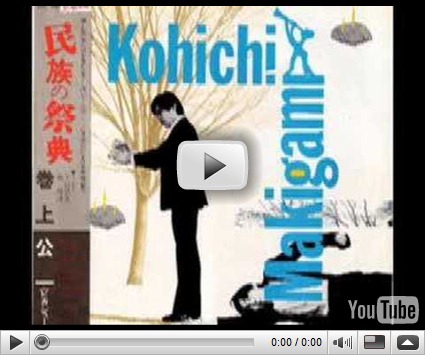
The movie Hear the Wind Sing then is an attempt to ride that aesthetic visually. At first, the cast don’t seem up to the task of replicating their text counterparts. Kaoru Kobayashi, normally an excellent actor, looks rather nebbish for the part and narrates Murakami’s prose rather woodenly. Kimie Shingyoji, who resembles a younger, more beautiful Eihi Shiina (Audition, Tokyo Gore Police), plays her character, a recurring woman in the narrator’s short return home, seemingly with ice running through her veins. Koichi Makigami, a highly talented musician and vocalist (see YouTube clip below), certainly looks the part of his character (named “The Rat”) with his rodent-like wide cheeks and squinty features but hardly emanates the coolness of a Murakami character.
Director Omori, who also wrote the screenplay, however, did try to create visuals which matched the quirkiness of the novella. There are several sepia-toned and black and white flashbacks, stock clips of ‘60s Japanese student movement riots, a funny and surreal film-within-the-film sequence, and even animation scenes that reflect the novella’s sometimes patch-work like construction. While interesting, the shifts can sometimes feel jarring and sometimes add unnecessary visual noise. Somewhere along the way, however, Omori manages to put both disparate elements in his film together and make them work. It can be said that some novels but especially Murakami’s have to exist in their own worlds. The casting and stylistic issues seem at first like missteps because they feel too much a part of a movie world and not Murakami’s world, a shift that does not occur until halfway through. If Omori had been able to figure out how to start in Murakami’s world earlier, the movie would have worked better but once the first chords of “California Girls”, a recurring piece on the soundtrack (which has an eclectic mix of bop, free jazz, early electronic music, and rock), kick in for the first time then we know Omori has made the shift.
Murakami’s work has been likened to music (c.f. Haruki Murakami and the Music of Words by Jay Rubin) not surprisingly considering he constantly references musicians, primarily western ones, in his stories. Stylistically, as any musician can tell you, what’s not played is as important as what is played. A drumbeat, for example, is typically definable by the space between beats as much as the beats themselves. Murakami’s style very much fits this metaphor in that he gives the reader just enough to be able to fill in any spaces left empty in the narrative. That Omori could take this style and make a good film out of it is a feat akin to making something out of nothing.
Hear the Wind Sing, the novella, was never released outside of Japan. An English-translated version exists but is currently out of print. The movie also was never released outside of Japan but can be viewed on YouTube without subtitles here.

Saturday, December 26, 2009
A Quick Filmic Look Back Into the Last Decade
 I was recently asked to list ten of my favorite Japanese films of this decade and here’s what I came up with off the top of my head and in no particular order:
Distance (Hirokazu Koreeda, 2001)
9 Souls (Toshiaki Toyoda, 2003)
Crying Out Love, In the Center of the World (Isao Yukisada, 2004)
Eureka (2000, Shinji Aoyama)
Tokyo Sonata (2008, Kiyoshi Kurosawa)
Battle Royale (2000, Kinji Fukasaku)
Vibrator (2003, Ryuichi Hiroki)
Hana and Alice (2004, Shunji Iwai)
Heart Beating in the Dark (2005, Shunichi Nagasaki)
Tokyo Godfathers (2003, Satoshi Kon)
It should be noted that there were several releases that really should have made this list (whether Kurosawa’s Bright Future deserved mention over Tokyo Sonata was a chore in itself) and certainly many more I have not even seen (early indicators suggest that Koreeda’s recent Air Doll might have supplanted Distance on my list, for example). The point of this list is that the 'noughts' have shaped up to be one of the most prolific decades in Japanese film since the fifties and there is plenty of talent to be excited about for the upcoming decade.
So what are your favorite films, Japanese or otherwise, of this decade?
Thursday, December 3, 2009
Review: The Great Happiness Space: Tale of an Osaka Love Thief (2006)
 Director: Jake Clennell
The Great Happiness Space looks at the world surrounding Rakkyo, a "host pub" located in the neon playground of Osaka, and its 22-year old owner, Issei. As expected, the movie is rife with scenes of effete young playboys with teased Final Fantasy-like hair slinging BS lines to young girls eager to relieve their paychecks for some fun and companionship. Meanwhile in the background, the champagne flows, the cheap techno beats bounce, and the money trades hands like cards on Valentines Day. At one point, Issei, portrayed as the smoothest of the hosts, smugly states, “…they’re just happy to be with me. Even if we don’t have sex, it’s enough to heal them.”
Healing is an important theme to The Great Happiness Space (this title is probably meant to evoke the concept of “The Floating World”). Only a third into the documentary, several patrons are revealed to behostesses themselves, prostitutes, and soapland attendants, contrasting with my expectations that they would be bored, rich college students or office workers. With this reveal, the film casts the adult nighttime industry in a human light. These are people whose jobs involve the fulfillment of other's physical needs sometimes at the expense of their own emotional needs. Thus, these women turn to Rakkyo as an oasis of sorts to fulfill their emotional needs with the hosts' attentions and needs. In a sense, Clennell presents an interesting dilemma: that these two needs are never truly fulfilled since they boil down to business transactions and sessions and not necessarily relationships. Even Issei himself admits that "Work is work....once you get feelings involved, you lose" meanwhile his biggest customers admit to spending thousands in one night.
The “pleasure” industry in Japan, once controlled by the government, has developed along a single dichotomous, but not mutually exclusive, line: the water trade (mizu shobai) characterized by flirtatious social interaction and drinking. Its hardcore counterpart (fuzoku) meanwhile deals with the carnal pleasures associated with the "pay-to-lay" aspects of the industry. Since its privatization, the industry has fallen into less savory hands (though it is debatable that, for example, the yakuza are more or less savory than the government) and certain segments such as prostitution have been criminalized or forced to exist euphemistically (i.e. there are massage parlors and ‘massage’ parlors). It was not until Japan's eventual contact with western societies, sex simply was not something associated with sin and debasement but just as a facet of life like worship and shopping. Incidental encounters with the industry are, in fact, not all that uncommon. Chirashi leaflets are stuffed seemingly by the pound into residential mailboxes, handed out in packs of tissues near train stations, and arrive in electronic form in every device that can receive them whether via email or text message. Furthermore, it's not an uncommon scene to pass a soapland, love hotel, and/or cabaret on the way to your local temple or store.
With his directorial debut, Clennell manages to document a subsection of Japanese society that people know about well, but not understand: the 'pleasure' industry. I will admit when I first heard about this documentary, I sort of cringed. If there is one thing that I have grown to loathe, it’s the gross exaggeration of modern Japan as a society of perverted and/or oversexed freaks. Surely a documentary about Japanese host clubs (think of a hostess club but with the role reversal female clientele and male employees instead) would do little to dispel that notion. However, The Great Happiness Space, like other successful documentaries of its kind, manages to show us that its flawed subjects are not apart from but rather a microcosm of the greater society.
Monday, July 27, 2009
Livestream stuff (or "Look ma, I'm on the internet!")
Undoubtedly, you have noticed the new toy on the front page, welcome to Gaijinzoku Cinema! The GC feed (whose standalone page is here) has a loop of various Japanese movie trailers, clips, and features. In the near future, I will also be posting some video blog stuff such as film and book reviews, interviews, etc. (which will be accessible as "on-demand" video). Also, if there's any demand, I may also broadcast a live event with a movie and/or have live discussion. Feel free to comment or email me if you have any feedback, suggestions, or ideas; I'd be happy to hear them. In the meantime, new trailers and clips will be added to the feed periodically so feel free to come and view them anytime.
Speaking of live events, I will be hosting a live movie night event sponsored by the other site I write for, Varied Celluloid. The link to the feed is here and the event will be on Sunday, August 2nd, 2009 at 7:00pm PST. I will review a couple of films then show some trailers and the uncut European edition of the horror comedy classic Braindead (aka Dead Alive) directed by a pre-Lord of the Rings and King Kong Peter Jackson. Again, feel free to log in - registration is not required - watch, and participate via text chat.
Speaking of live events, I will be hosting a live movie night event sponsored by the other site I write for, Varied Celluloid. The link to the feed is here and the event will be on Sunday, August 2nd, 2009 at 7:00pm PST. I will review a couple of films then show some trailers and the uncut European edition of the horror comedy classic Braindead (aka Dead Alive) directed by a pre-Lord of the Rings and King Kong Peter Jackson. Again, feel free to log in - registration is not required - watch, and participate via text chat.
Sunday, July 26, 2009
Short, sharp shocks: The X from Outer Space, Cash Calls Hell, Abashiri Prison
"Short, sharp shocks" is a new section in which I will give short looks at films that are not readily (and/or officially) found on DVD at the time of writing.
 The X from Outer Space (1968; dir: Kazui Nihonmatsu). The "X" (or Guilala as he is known in his native Japan) was, as you can imagine, another Godzilla cash-in replete with a rubber suited monster (which is very chicken-like, to boot), terrible cityscapes constructed of models, even worse spaceship sets, lasers, convoluted sci-fi dialog (the monster can be destroyed by an element known as "Guilalaium"), broad characterizations, and bad acting. The plot is standard: ol' X comes from a pod-like egg resulting from the main characters' trip through an asteroid belt. Of course, ill-advisedly, they bring the pod back and X hatches and reaks (reeks?) havoc on Tokyo and the surrounding areas. Unlike other kaiju films of its kind, X dispenses with an orchestral or even a stock film score and opts for a lot of ill-fitting go-go music instead. Put out by the normally classy Shochiku studios, The X from Outer Space is for B-movie and/or kaiju fans only. For everyone else, leave the Guilala and get with the Godzilla. A sequel of sorts, The Monster X Strikes Back, has recently been released.
Cash Calls Hell (1966; Dir: Hideo Gosha).
 Whether or not the influence of the West in Japan has been positive is an ongoing question in many academic circles. However, the influence of Western filmic styles has been extremely beneficial, especially in capturing the mood of post-WWII Japan (native films were heavily censored during the war and foreign films were outright banned): the rampant poverty, lawlessness, desperation, anger have all been captured in, among many other films, The Burmese Harp (1956; dir: Kon Ichikawa), The Human Condition trilogy (1958, 1959, 1962; dir: Masaki Kobayashi), and later in the epic Battles Without Honor and Humanity series (1973 - 1979; dir: Kinji Fukasaku). Gosha's Cash Calls Hell is another that owes a lot to Western film, noir in particular. Always awesome Tatsuya Nakadai plays Oida, an ex-con, caught in the middle of a two-year blood pact between four other men whom Oida must go along with and against throughout the film. Gosha, always a capable director, puts in one of his best efforts and does well replicating noir techniques: lighting, odd and interesting camera angles, and nicely framed shots. A shame this isn't available officially on any format.
 Abashiri Prison (1965, dir: Teruo Ishii) Ken Takakura, who plays the protagonist of Abashiri Prison, is probably better known outside of his country for his roles in the 1974 Sydney Pollack potboiler The Yakuza, the broad 1992 comedy Mr. Baseball, and animal trainer to Michael Douglas and Andy Garcia in 1989's Black Rain (Takakura's classic line "And I DO speak fucking English" should have been picked up as an advertising slogan for an English school in Japan but that's another story). It may surprise people who only know him for these roles that Takakura is somewhat of a God in the Japanese acting community and the Abashiri Prison series, which got up to seventeen installments, is what elevated him to that status. Takakura plays Tsukibana, a two-bit gangster with a heart of gold whose quick temper and poor decision-making have landed him in Abashiri (an real-life former prison in the Hokkaido region). Tsukibana's mother has fallen sick so he is stuck between waiting for a parole stay or escaping prison. When he becomes an unwitting accomplice to an escape, he must then figure out the right path to redemption. Abashiri is a capable film with a little of everything: action, comedy, mystery, drama but it's Takakura who keeps it all together; his charismatic presence absolutely dominates the film and definitely elevates it above the typical yakuza actioneer. Genre film fans might also take note that this film, much as it did with Takakura, made director Teruo Ishii a household name (well, he was able to get more work anyway). However, you might not find a speck of evidence in Abashiri Prison of what you would find in Ishii's later works such as Shogun's Joy of Torture and Orgies of Edo.
Saturday, February 21, 2009
Festivals On the Rise!
 The one thing I love about living near a big city is the opportunity to check out large film festivals. Being a huge genre film fan, I have always been somewhat jealous of places like New York and Toronto that host big festivals which focus on films I like to watch. Then, there are places like Los Angeles that house theaters that I would pay rent to reside in, just so I wouldn't miss a single showing.
The San Francisco Bay Area, of course, is no slouch when it comes to film festivals and events. In addition, this area has its own slant to festivals; as the last link shows, they tend to focus on diversity as well as individuality. I was bound (pun intended) and determined to attend the "I Am Curious" pink eiga event at the Roxie last week at the San Francisco Independent Film Festival but was hit by the mutant cold that's been going around lately. Luckily, though, the San Francisco International Asian-American Film Festival is rolling through in a "hot on the heels" sort of way and has several showings during the Kiyoshi Kurosawa (director of Cure and Pulse[aka Kairo]) that I'm hoping to attend.
Tokyo Sonata, Kurosawa's latest, is at the top of my list. His first non-horror film in six years, it has been receiving very favorable reviews since its release late last autumn. It's also the first film he's done without his usual leading man Koji Yakusho in that long. This is a bit of a surprise since Yakusho, when not starring for Kurosawa, typically plays in family dramas like Tokyo Sonata. The spotlight will also feature many rarer Kurosawa films such as Eyes of a Spider and Serpent's Path, both meditations on violence and revenge and featuring another common Kurosawa leading man, Sho Aikawa (below), as well as 1998's dryly comedic yet human License to Live.
 Two other Kurosawa-helmed Aikawa vehicles that I'm hoping to catch are The Revenge: A Visit from Fate and The Revenge: The Scar That Never Fades, both V-Cinema yakuza flicks that will be screening one after the other. Direct to video yakuza flicks are typically pretty cheaply made on digital video and feature tons of ridiculous overacting, gunplay, and haircuts. If there's one director, however, who's proven that he can make V-Cinema stand for "very good" cinema, it's Kurosawa. I'm currently looking for people to see these last two showings with but, considering the rarity of the two films, I will go alone if I have to. Stay tuned for reviews of some sort.
Saturday, August 2, 2008
Check out the Road(kill) Show

I started a blog with a slightly different theme here. I will keep this one going as usual but thought it'd be fun to have a place to aggregate good cult/horror/exploitation trailers that I find on YouTube. I was messing around with 1up's (1up is a videogame site) blogging features and they were simple enough and, since I'm there getting my nerd fix daily, I decided to share the world of
Feel free to drop by anytime as the blog will be updated with a new trailer or clip daily and, if you're already a 1up member (it's free, if not), comments and thumbs up are greatly appreciated.
Monday, July 7, 2008
Review: Message From Space (1978)
Director: Kinji Fukasaku

Jillucia, a world of peace-loving people, have their planet taken hostage by the evil Gavanas whose leader vaguely looks and dresses like a low rent Optimus Prime. The leader of the Jillucia sends out eight liabe seeds (the titular "messages from space") to the universe to search for the chosen ones who will save their planet, and the whole universe. These saviours end up being a few daredevils (one of which is Hiroyuki Sanada), a grumpy but sensible ex-general (veteran Vic Morrow who looks visibly aware that he's the only one turning in a decent performance) and his robot, and a deposed Gavanas prince (Sonny Chiba). And, yes, since Sonny and Hiroyuki are in the movie, Etsuko Shihomi was also along for the ride, playing the Princess Leia-like Esmeralida of the Jillucians, and looking pretty good in her white satin robe getup. And, YES, Tetsuro Tamba is along for the ride to nibble a little of the scenery as well.
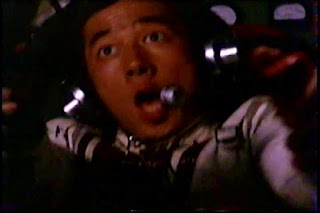
Message From Space shares other things with Star Wars than Leia-looksortofalikes: there's the requisite cantina scene, Morrow turns in a surly Han Solo-like performance, even the one lone (and extremely perky) female daredevil is named "Meia", even the soundtrack vaguely feels like something that was fished out of John Williams' garbage. Since Message was released a year after Star Wars, it's pretty obvious that Toei was trying to cash in by throwing in some bits from the Lucas epic, then-stars Chiba, Sanada, and Shihomi, and a veteran gaijin actor who needed a paycheck in Morrow. To a degree, and probably more to the credit of Fukasaku, the combination works.
 Of all the Japanese films I've seen, if there was ever a film that exemplified the bloat and excess of that country's 1980's bubble era, it is the live-action version of 1988's Tokyo - The Last Megalopolis with its all star cast (Shintaro Katsu, Kyusaku Shimada, Jo Shishido, Tetsuro Tamba), going-everywhere-except-toward-a-conclusion storyline, and its single decent special effect designed by H.R. Giger, the film feels like a "because we want to and because we can" type of affair. Though Fukasaku's Message From Space pre-dated this era of great wealth and waste, it does share some of the bloat. The quality of studio sets and effects range from high school cardboard standups to subpar '70s Battlestar Galactica laser effects. Hell, even the laser guns in the movie look like exotic garden hose attachments than scientifically designed firearms capable of containing and conducting a laser to its destination. Still, though, to Fukasaku's credit, it really looks like he was trying to stretch the budget (the amount of which is unknown to me) instead of cut corners. The film is also well-paced and has enough dogfights and goofball action for every fan of good, cheap sci-fi.
The copy that I watched was the English dubbed version but here's the original Japanese trailer:

Jillucia, a world of peace-loving people, have their planet taken hostage by the evil Gavanas whose leader vaguely looks and dresses like a low rent Optimus Prime. The leader of the Jillucia sends out eight liabe seeds (the titular "messages from space") to the universe to search for the chosen ones who will save their planet, and the whole universe. These saviours end up being a few daredevils (one of which is Hiroyuki Sanada), a grumpy but sensible ex-general (veteran Vic Morrow who looks visibly aware that he's the only one turning in a decent performance) and his robot, and a deposed Gavanas prince (Sonny Chiba). And, yes, since Sonny and Hiroyuki are in the movie, Etsuko Shihomi was also along for the ride, playing the Princess Leia-like Esmeralida of the Jillucians, and looking pretty good in her white satin robe getup. And, YES, Tetsuro Tamba is along for the ride to nibble a little of the scenery as well.

Message From Space shares other things with Star Wars than Leia-looksortofalikes: there's the requisite cantina scene, Morrow turns in a surly Han Solo-like performance, even the one lone (and extremely perky) female daredevil is named "Meia", even the soundtrack vaguely feels like something that was fished out of John Williams' garbage. Since Message was released a year after Star Wars, it's pretty obvious that Toei was trying to cash in by throwing in some bits from the Lucas epic, then-stars Chiba, Sanada, and Shihomi, and a veteran gaijin actor who needed a paycheck in Morrow. To a degree, and probably more to the credit of Fukasaku, the combination works.
 Of all the Japanese films I've seen, if there was ever a film that exemplified the bloat and excess of that country's 1980's bubble era, it is the live-action version of 1988's Tokyo - The Last Megalopolis with its all star cast (Shintaro Katsu, Kyusaku Shimada, Jo Shishido, Tetsuro Tamba), going-everywhere-except-toward-a-conclusion storyline, and its single decent special effect designed by H.R. Giger, the film feels like a "because we want to and because we can" type of affair. Though Fukasaku's Message From Space pre-dated this era of great wealth and waste, it does share some of the bloat. The quality of studio sets and effects range from high school cardboard standups to subpar '70s Battlestar Galactica laser effects. Hell, even the laser guns in the movie look like exotic garden hose attachments than scientifically designed firearms capable of containing and conducting a laser to its destination. Still, though, to Fukasaku's credit, it really looks like he was trying to stretch the budget (the amount of which is unknown to me) instead of cut corners. The film is also well-paced and has enough dogfights and goofball action for every fan of good, cheap sci-fi.
The copy that I watched was the English dubbed version but here's the original Japanese trailer:
Wednesday, July 2, 2008
Another Bye-Bye
 Well, I don't mean to turn this blog into the bearer of bad news but we have another organization to sort of bid a fond farewell to. Some of you might know that Tartan USA shut its doors a couple of months ago and basically liquidated all of the films in their collection. The significance of this information to this blog is that Tartan had their "Asia Extreme" line of films which included some household titles like Oldboy, A Tale of Two Sisters, the re-release of Tetsuo, Vital, Marebito and others. Tartan also had a small but respectable line of other indie titles in their catalog including Battle In Heaven and The Cave of the Yellow Dog. This should have been a foreshadowing of worse things to come. In fact, the worse has come as Tartan's main UK branch appears as if they have done the equivalent of filing chapter 13 bankruptcy.
This is not particularly big news for the US since there is not much of a shortage of indie companies releasing seeming waves of Asian films. In fact, Media Blasters recent stepping up their Tokyo Shock line by dipping into the Shaw Brothers catalog suggests that they could theoretically pick up the Asia Extreme line. For UK and Euro film fans, though, the cut is much deeper since Tartan has been one company that has really pushed indie movies and their catalog certainly shows it; if you dig deep enough you will find that they had releases as diverse as El Topo, Battle Royale, Tokyo Story, and Super Size Me. For our UK and Euro fans' sake, we hope that Tartan can pull through OK.
Wednesday, June 11, 2008
Review: Viva Chiba Edition
The Bodyguard (1973/1976)
 Director: Ryuichi Takamori/Simon Nuchtern
The Bodyguard starts off with a humorously modified version of the biblical passage Ezekiel 25:17, now famouslylifted used by Quentin Tarantino in Pulp Fiction (OK, everyone now...."The path of the righteous man is beset on all sides by the inequities...blahblahblah"). Unfortunately, the movie which follows this opening is anything less than biblical, unless you're talking about the snoozy Leviticus. The Bodyguard starts promising enough: a mafia boss and henchmen are gunned down by a number of "unknown assailants" (forget that this happened in broad daylight in front of a church in New York City), we then get a martial arts demo that was obviously tacked on by U.S. director Nuchtern for some context. Next, cut to an airplane hijacking, an attempt to flush out Sonny Chiba in a crowd of passengers. This, of course, ends in all of the criminals getting the crap kicked out of them and the audience getting Chiba's hammy fist shaking in its face. Finally, the press conference in which the best line of the movie is spoken:
Isn't that just bad ass? Everyone should be able to use that line for an incident in their lives and get an immediate pardon. God knows the last few U.S. presidents could have used that power.
From there, though, the movie just kid of goes downhill. Chiba hates drugs, offers his services as a bodyguard to anyone willing to testify against the gangsters bringing in the drugs which gets him mixed up with a woman (Mari Atsumi) who may or may not have information or drugs or...? After a while, it just doesn't matter as the movie gets as stilted as Chiba looks in the outrageously garish suits he has to wear in the movie (see picture). For a Chiba movie, there is fairly low level of action and, for what little there is, it's pretty unexciting and feels cheaply staged. The eye poking and arm-putation scenes were kind of fun, though.
The Bodyguard is obviously a Japanese production with a few scenes (the aforementioned martial arts demo and some New York scenery filler) added in by an American production crew to pad the movie for a few extra minutes. Too bad that they couldn't add in a little more "good" as well.
Sonny Chiba's Dragon Princess (1976)
 Director: Yutaka Kohira
With a title like Dragon Princess and with both Sonny Chiba and protegee Etsuko Shihomi, I was expecting some wacky fantasy jidaigeki in the vein of Legend of the Eight Samurai (not coincidentally also starring Chiba, protege Hiroyuki Sanada, and Shiomi) or at least get a chance to see a Japanese midget in tights. Bummer, though, Dragon Princess is the typical martial arts story: student/offspring Shihomi has to avenge father/teacher Chiba who has been beaten badly beaten and run out of town by the owner of a rival dojo (Bin Amatsu). Amatsu, though a grandmaster, has his own stable of crooked students including the "Big Four", a quartet of martial artists who each has his own specialty weapon.
Shihomi stays pretty covered up in monk's robe throughout the movie since she has to stay with her grandfather after Chiba's death. In contrast, many female characters in Japanese movies at the time had to bear some skin, have their breasts stabbed, fondled, or ravished, or tied up and whipped. Shihomi was relatively spared these sorts of trials of being a Japanese actress mainly because of her physicality and ties with Chiba's "Action Club" of young martial-artists. Regarding the former, Shihomi is very convincingly physical during her scenes, no half-assed, floppy-armed choreography that you usually see in the sukeban movies of the same era. You can tell that she's really enjoying herself; in one scene, she performs a standing triple flip then straddles him to the ground and smashes his face in for good measure. After that she kicks and punches her way through about a dozen more enemies and ends with a "want some more, bitch?!?!" look on her face. Shihomi is pretty awesome to watch even if this movie of hers is tepid, at best.
Karate Warriors (1976)
 Director: Kazuhiko Yamaguchi
Though not as well known as its predecessors, Karate Warriors was actually the fourth, and last, of "The Streetfighter" series in Japan. To the film's fortune, it shows. The story fits well within the series: Chiba plays all-around scumbag "Chico" (in the English dubbed version) caught in a proxy war between two yakuza gangs headed by brothers looking for heroine stashed away by a former boss. When Chiba finds the hidden heroine (by finding the clue conveniently hidden in the dead boss' memorial tablet -- guess nobody bothered touching it previously!), all hell breaks loose as Chiba tries to get away with it and the two gangs hot on his trail.
There are many bizarre idiosyncrasies throughout the film: although obviously a modern film by the '70s fashions the characters wear, one of the gangs employs a samurai, replete with sword and geta, to fight for them. Also, for a film with so many yakuza, there are relatively few guns. My guess is that these were pretty cheap thugs in a stingy town or a pretty cheap film crew in a stingy film company. One thing that wasn't skimped on, though, was camera effects: lots of slo-mo round-house kicks (take that Matrix and Chuck Norris!), punches, sword slashes. Prime stuff for the true Chiba fan.
Final note: All of the above movies are part of the "Welcome to the Grindhouse" series of double features released by Deimos/BCI. Dragon Princess and Karate Warriors are packaged on one disc while The Bodyguard is packaged with Sister Street Fighter (which will be reviewed sometime in the future since this version is not the best). All of these films are dubbed in English with no subtitles or Japanese language options.
 Director: Ryuichi Takamori/Simon Nuchtern
The Bodyguard starts off with a humorously modified version of the biblical passage Ezekiel 25:17, now famously
Interviewer: "You killed five mobsters with your bare hands. It took great courage. Why did you do it?"
Chiba: Because I had to.
Isn't that just bad ass? Everyone should be able to use that line for an incident in their lives and get an immediate pardon. God knows the last few U.S. presidents could have used that power.
From there, though, the movie just kid of goes downhill. Chiba hates drugs, offers his services as a bodyguard to anyone willing to testify against the gangsters bringing in the drugs which gets him mixed up with a woman (Mari Atsumi) who may or may not have information or drugs or...? After a while, it just doesn't matter as the movie gets as stilted as Chiba looks in the outrageously garish suits he has to wear in the movie (see picture). For a Chiba movie, there is fairly low level of action and, for what little there is, it's pretty unexciting and feels cheaply staged. The eye poking and arm-putation scenes were kind of fun, though.
The Bodyguard is obviously a Japanese production with a few scenes (the aforementioned martial arts demo and some New York scenery filler) added in by an American production crew to pad the movie for a few extra minutes. Too bad that they couldn't add in a little more "good" as well.
Sonny Chiba's Dragon Princess (1976)
 Director: Yutaka Kohira
With a title like Dragon Princess and with both Sonny Chiba and protegee Etsuko Shihomi, I was expecting some wacky fantasy jidaigeki in the vein of Legend of the Eight Samurai (not coincidentally also starring Chiba, protege Hiroyuki Sanada, and Shiomi) or at least get a chance to see a Japanese midget in tights. Bummer, though, Dragon Princess is the typical martial arts story: student/offspring Shihomi has to avenge father/teacher Chiba who has been beaten badly beaten and run out of town by the owner of a rival dojo (Bin Amatsu). Amatsu, though a grandmaster, has his own stable of crooked students including the "Big Four", a quartet of martial artists who each has his own specialty weapon.
Shihomi stays pretty covered up in monk's robe throughout the movie since she has to stay with her grandfather after Chiba's death. In contrast, many female characters in Japanese movies at the time had to bear some skin, have their breasts stabbed, fondled, or ravished, or tied up and whipped. Shihomi was relatively spared these sorts of trials of being a Japanese actress mainly because of her physicality and ties with Chiba's "Action Club" of young martial-artists. Regarding the former, Shihomi is very convincingly physical during her scenes, no half-assed, floppy-armed choreography that you usually see in the sukeban movies of the same era. You can tell that she's really enjoying herself; in one scene, she performs a standing triple flip then straddles him to the ground and smashes his face in for good measure. After that she kicks and punches her way through about a dozen more enemies and ends with a "want some more, bitch?!?!" look on her face. Shihomi is pretty awesome to watch even if this movie of hers is tepid, at best.
Karate Warriors (1976)
 Director: Kazuhiko Yamaguchi
Though not as well known as its predecessors, Karate Warriors was actually the fourth, and last, of "The Streetfighter" series in Japan. To the film's fortune, it shows. The story fits well within the series: Chiba plays all-around scumbag "Chico" (in the English dubbed version) caught in a proxy war between two yakuza gangs headed by brothers looking for heroine stashed away by a former boss. When Chiba finds the hidden heroine (by finding the clue conveniently hidden in the dead boss' memorial tablet -- guess nobody bothered touching it previously!), all hell breaks loose as Chiba tries to get away with it and the two gangs hot on his trail.
There are many bizarre idiosyncrasies throughout the film: although obviously a modern film by the '70s fashions the characters wear, one of the gangs employs a samurai, replete with sword and geta, to fight for them. Also, for a film with so many yakuza, there are relatively few guns. My guess is that these were pretty cheap thugs in a stingy town or a pretty cheap film crew in a stingy film company. One thing that wasn't skimped on, though, was camera effects: lots of slo-mo round-house kicks (take that Matrix and Chuck Norris!), punches, sword slashes. Prime stuff for the true Chiba fan.
Final note: All of the above movies are part of the "Welcome to the Grindhouse" series of double features released by Deimos/BCI. Dragon Princess and Karate Warriors are packaged on one disc while The Bodyguard is packaged with Sister Street Fighter (which will be reviewed sometime in the future since this version is not the best). All of these films are dubbed in English with no subtitles or Japanese language options.
Saturday, May 31, 2008
Review: Shogun Assassin (1980)
Reprinted from Eigazoku.
Director: Kenji Misumi/Robert Houston
I know that, as soon as I finish this review and hit the "Publish Post" button, a small group of Lone Wolf and Cub fans will be sending their ninja armies to wipe me and any trace of this blog entry. If you don't see a "Trailer of the Week" tomorrow, just know that I meant it to be for the Sonny Chiba vehicle The Executioner. Also, tell my wife and kids that I love them.
It is true that Shogun Assassin is a bit of an unloved bastard flick in the chambara community, discussions of which usually start with the question, "Why see this when you can see the vastly superior originals?". A little confused? OK, here's the story:
 In the late '70s, producer and 'director' (used in the very loosest definition of the word) David Weisman and Robert Houston, fans of the Lone Wolf and Cub films, bought the rights of the second in the series, the title of which we now know as Lone Wolf and Cub: Baby Cart At the River Styx as well as some expository bits from the first, Lone Wolf and Cub: Sword of Vengeance. Under the auspice of bringing the series to a western audience but presumably worried that the series "orientalism" might not be well received, Weisman and Houston decided to cut their own version by splicing together bits and pieces from both films, overdubbing voices and narration for story purposes, and creating a synth-pop score by ex-Paul Revere and the Raiders lead Mark Lindsay. If this isn't weird enough, a young Sandra Bernhard was also added in as a voiceover part as the lead woman ninja and then the whole package was eventually picked up by Roger Corman's New World Pictures for distribution. I swear all of the video mashup hacks on Youtube couldn't have dreamed of such a scenario.
 Well, the question at this point is: does it work? Yes, to a degree it does. The story gets transformed to a straight up adventure tale: main character Ogami's wife gets killed by the shogun's clan after which Ogami and his son walk the earth like Caine in Kung Fu to kill the shogun's brother (why they don't want to just kill the shogun himself is not too clear) who is protected by the "Three Masters of Death". All the while, various "ninja" are ordered by the shogun to do them in but Ogami is not one to let just anyone try to get in his grill and dispatches them to their graves.
Now, the final question: does Shogun Assassin deserve a place in the Lone Wolf and Cub pantheon? Well, without sounding like a film snob, HELL NO! Shogun Assassin is the equivalent of someone clipping out pieces of Picasso's paintings, pasting them together, and calling it "A Bunch of Cubes". In its favor, it does move along at a nice pace and has some of the best sword fights and goriest kills of the first two films. Also, in retrospect, we have to consider the film's place in history. At the time of its release, it was all but impossible to see chambara flicks unless you lived near a Chinatown or Japantown and the Lone Wolf and Cub series (incidentally, of which there are six films) was definitely out of the picture even though it had almost been a good decade after the series initial release in Japan. Even Shogun Assassin on VHS was a bit difficult to find if you lived in a suburban American town so this was the only outlet for chambara outside of Kurosawa and Inagaki. You can imagine that this film introduced the genre to thousands and, even though it's not the cinematic experience that its source material is. It might be worth seeing as an oddity or nostalgia piece.
If you prize the originals, though, don't bother.
The trailer, in a nutshell, tells all:
Compare this with the original Toho production trailer of Lone Wolf and Cub: Baby Cart At the River Styx:
Tuesday, February 19, 2008
Review: Her Brother (1960)
Reprinted from kuzu
Before we launch into our review, let's first look at some of the historical details of Her Brother (Japanese title: おとうと) :
-Adapted from the best-selling autobiography of Aya Koda, daughter of Rohan Koda, one of Japan's greatest authors of historically-based heroic fiction
-Directed by Kon Ichikawa (R.I.P.) who, up to Her Brother's release, had already released two of his masterworks, Fires On the Plain and The Burmese Harp, as well as his adaptations of Junichiro Tanizaki's The Key and Mishima's Enjo
-Featured at the 1961 Cannes Film Festival where it was also given a technical reward for the now-named "Bleach Bypass" color technique used to give the film its classic feel
-Multi-award winner in its native Japan including prestigious Best Film and Best Director Kinema Junpo awards
-Features an all-star cast of Keiko Kishi (Kwaidan, Early Spring and, in my opinion, has one of the most adorable pouts in film history), Hiroshi Kawaguchi (Floating Weeds, Giants and Toys,), Kinuyo Tanaka (Ballad of Narayama, Ugetsu), Masayuki Mori (Rashomon, The Bad Sleep Well)
-Also features an early acting role by a young Juzo Itami who would later go on to direct the modern classics A Taxing Woman and Tampopo
Her Brother is the story of a dedicated young woman, Gen (Kishi), who must tend to the needs of her brother Hekiro (Kawaguchi), father (Father), and stepmother (Tanaka). By all measures, one would think this film to be yet another classic in the Ichikawa resume but has instead all but sunk into obscurity in the western world. It's a shame because on the surface, though a melodrama, Her Brother is a strong portrait of Japanese families and, more specifically, women's roles within them. Despite the title, the film focuses more on Gen, the daughter in the family, and her forced role as the mother of the family due to the presence of her rheumatic stepmother: she cooks, cleans, runs the errands, and has to discipline and cover debts for Hekiro who is only a few years younger than her. Though the familial relationships are visibly strained, Gen wills herself as the glue that keeps them together even foresaking a domestic married life to do so. It's not until Hekiro becomes ill with tuberculosis that the family is able to come back together as a unit.
Though Ozu, for example, has touched on these issues throughout his career, Ichikawa in His Brother takes a different approach by relying less on visual cues via cinematography and instead relies on the viewer to understand the film through the dialog and actions of its characters. Ichikawa, however, does not skimp on the visuals. The family's home with its thin walls and fusuma (sliding doors) were used brilliantly to show how close people can be and yet how emotionally distant they really are. Passage of time is, likewise, shown very subtly: the chirp of cicadas signals summertime while the different patterns in clothing and layers worn by characters signal the passage of time.
Again, it's a shame that this film is not available for viewing anywhere except at special screenings (the one I attended was once again part of Stanford University's Japan 1960 series). Her Brother is a nice accompanying piece to Mikio Naruse's When a Woman Ascends the Stairs, released the same year. The former explores female roles in the family while the latter explores their roles within society; both of them excellent studies of this subject.
Trailer:
Saturday, February 16, 2008
Letters From Iwo Jima tonight on AMC
 There will be two special commercial-free showings of Letters From Iwo Jima tonight on AMC at 8PM and 10:30PM EST. Information and media here.
Wednesday, February 13, 2008
Kon Ichikawa Dead
One of the last of the Japanese master directors has passed away today as reported by The Mainichi Daily News here:
Japanese film director Kon Ichikawa dead at 92
TOKYO (AP) -- Kon Ichikawa, the Japanese director of such films as "Harp of Burma" and "Tokyo Olympiad," has died. He was 92.
Ichikawa died of pneumonia in a Tokyo hospital on Feb. 13, said Chizuko Wagatsuma, a spokeswoman with Toho Co., the company that released "The Makioka Sisters" and many of his other films in the 1970s and 1980s.
He had been hospitalized since mid-January, she said.
11/20/15 - 02/13/08
R.I.P.

Tuesday, February 12, 2008
Review: House (aka Hausu) (1977)
Reprinted from Eigazoku
Director: Nobuhiko Obayashi
 House is less a movie than an exercise in creativity, ambition, surrealness, as well as annoyance with occasional boredom. Consider that it had a first-time feature director in Nobuhiko Obayashi, soundtrack by folk-rockers Godiego, and a young female lead cast whose syrupy cute chemistry together probably could have been crystallized into the form of a House idol group for a one-off pop single. Even their character names are "hip", pointing to the character type they play: Oshare (which means "fancy" in Japanese) is the fashionable one, Kung-Fu is the athletic one, Mac (for stomache) is the glutton who's always eating and so on. With all of these elements, Obayashi could have made something plain: maybe a youth summer adventure film or maybe a coming-of-age romance story, or even horror. The fact that he chose "all of the above" resulted in House.
 The premise is fairly simple: six female classmates, on their summer break, decide to spend some time at Oshare's aunt's old house in the country. As everyone knows, though, old houses have secrets and this one wants to literally consume them. What the film really about, though, is near free-form experimentation. Obayashi, it's said, had wanted to make his film one which would have audiences fall in love with film again. To this end, he and his crew pulled out all stops in producing a film that incorporates nearly every audio and visual effect possible, sometimes several happening at once. There is an abundance of bizarre story elements; for example, when one man literally goes bananas because he doesn't like watermelons. Genre boundaries are frequently crossed from teen film to horror to romance to action to comedy, you really can't guess what the film is going to spit out at you next.
 Does Obayashi's grand experiment work though? Yes and no. House is literally a visual feast not unlike, say, Takashi Miike's The Happiness of the Katakuris and Tetsuya Nakashima's Kamikaze Girls. However, also like those films, the experimentation can be a little too wink-wink nudge-nudge, a little too cute, and in some sequences, a little too tedious. Ironically, I found several of the scenes in which we learn more about the connection between the house and Oshare's aunt to just simply crawl. In contrast, though, there are also several very clever scenes: a sepia-toned silent film sequence explaining Oshare's family history, and Kung-Fu's several battle scenes were ones that stood out for me. Most of the scenes were filmed in studio sets, the use of mattes give the film an otherworldly feel. One scene showing Tokyo Station, normally one of the most common sites in Japan, was especially surreal and somehow beautiful at the same time.

House did very well upon its release in Japan and one thing's for sure is that this is one of the films that's usually on most Japanese cult movie fan's want list. Seeing as the film is celebrating its 30th anniversary this year and that it can still manage to be fresh, interesting and bizarre in today's film scene actually says a lot. It's not a film for everyone and it will reward as much as it frustrates but it's a recommended watch, even if only just once.
The trailer was this week's "Trailer of the Week" and can be seen here.
Review copy obtained through allcluesnosolutions.com and located here in their catalog.
Friday, February 8, 2008
Review: Cruel Story Of Youth (1960)
 Reprinted from kuzu.
This showing of Cruel Story Of Youth (dir: Nagisa Oshima, best known for In the Realm of the Senses) was provided through Stanford University's Center For East Asian Studies' Japan 1960 film festival (check their blog here for information on the festival's theme and other showings) . Perhaps unconsciously, I wore one of my kelly green aloha shirts which would become a sort of rebel fashion statement to such rebels of the time onward to being a yakuza-adopted fashion into the '80s. I had even proposed to my old high school friend Adam (his Japanese film blog is here) , whom I attended with, that we stage a fight in front of the auditorum to get ourselves into the mood but he refused. Failed male bonding notwithstanding, we watched the film unscathed even though I felt like I was fighting with the auditorium's old seats for a little back comfort.
Cruel Story Of Youth (Japanese title: 青春残酷物語 and also known as Naked Youth) is a raucous "rebel without a pause" story with scenes of fighting, suggested sex, smoking, aloha shirts (ahem), blood, sweat, and tears, not to mention the requisite "jolt your senses" orchestral hits. The story follows the forever scowling Kiyoshi (actor Yusuke Kawazu) and Makoto (super-actress Miyuki Kuwano), both students, who both meet when Makoto gets mixed up with a salaryman whom she had bummed a ride with. Kiyoshi ends up saving her and shaking the man down for some yen. This shakedown plays itself out throughout the film as they pick up other suckers for the thrills and cash to the point in which the two almost develop a pimp-prostitute relationship. Meanwhile, there's Makoto's disapproving family, Kiyoshi's middle aged sugar mama, and a gang of thugs and a yakuza who popup to further make their lives miserable. Makoto's relationship with her sister is especially volatile. An important backdrop to the film is the year it was filmed in: 1960. While the introductory entry in the Japan 1960 blog best describes the atmosphere of that year, in a nutshell, that year was a time of great turmoil as many activists were protesting against the renewal of the US-Japan Security Alliance. For the purposes of the film, Makoto's sister and a former lover of hers who is a doctor are portrayed as former activists whose ideals have already been sold out.
On its surface, the film can be seen as a somewhat exploitative cautionary tale about wasted youth (this film was released by the Shochiku film studio under the auspice of being a "taiyozoku" youth-oriented film) but Oshima seems to want to say much more. Oshima, a former leftist protestor in his own youth but disillusioned with both the left and right by the time of this film, portrays his characters much as he saw the world: people who are neither find themselves part of the left or right and, in fact, caught between the proverbial rock and a hard place instead. This is a recurring theme that would be explored in Oshima's later films: The Sun's Burial, Night and Fog In Japan, and to a certain degree, Boy. Besides the theme, the cinematography is quite good: vivid colors, nice handheld camera work, and good use of light and dark - there's one noir-ish scene in which Kiyoshi is gnawing on an apple that is very striking in showing how he is actually gnawing away at his very soul. Another great shot is when, after the two protagonists have broken up, Makoto is seen walking down a busy street only lit by the headlights of cars, her profile half cutout of the shot. The audio in this scene is nothing but the reverberating sound of her heels on the pavement, the sound of despair and isolation that echoes Kiyoshi's earlier declaration to her (paraphrased): "Whether together or alone, it will all end up [bad] in the end".
Provocative stuff but then Oshima is no stranger to that.
Cultural note: The aforementioned apple scene has Kiyoshi bringing one to Makoto after an illegal abortion (performed by her sister's former lover). It's a Japanese custom to bring fruit to an ailing person as a "get well" gesture.
Film Availability: Currently only on VHS
Trailer:
Thanks to the Japan 1960 series folk, Donald Richie's "A Hundred Years of Japanese Film", and Nelson Kim's article on Oshima on Senses of Cinema site for providing some of the background used in this review.
Sunday, February 3, 2008
Review: Biotherapy (1986)
Reprinted from Eigazoku
Director: Akihiro Kashima
Director: Akihiro Kashima
 A recent donation of this bootleg to the 'zoku review coffers from Slash and Burn proved to be a two-fold blessing: the first being the ability to see some good ol' mid 80's V-cinema (the Japanese equivalent of "direct-to-video"), most films of which will probably never be seen on DVD, and the second, I didn't have to pay for this crap.
Biotherapy is a horror/sci-fi shocker that clocks in just short of an hour. That's right, short so you know a lot of logic is bound to get pulled out of the story like an eyeball from a screaming scientist. The story is that some scientists at the Hirose Research Institute of Biology have developed a GT (glutamyltransferase, in case you were wondering) serum derived from meteors which speeds up biological growth. As it turns out, not everyone is cool on this serum: an ugly alien-like thing, described as a "miraijin" or time traveller, in the film and probably played by the director's big brother, has been sent to retrieve the serum and cause the most unnecessarily gory violent deaths to those who developed it. Why? At under an hour do you care? Actually, since no edition of this film has any kind of English subtitles, all of the time traveller's dialog was made much harder to understand since it was overdubbed with this cheesy echoplexed "demonic" voice that has been used in Japanese TV and films for, like, ever. Let's just assume that our time traveller friend objected to the scientific and moral ramifications of the serum's use or, heck, maybe he just wanted to tear various limbs and innards from a gang of earthfolk. It's all about the same thing, isn't it?
Gore-wise, Biotherapy has some pretty nifty scenes and did win a special effects award from, of all sources, the manga magazine Young Jump. I've seen comparisons to the Guinea Pig series and, yes it does have its share of entrailsectomies, tonguesectomies, and eyesectomies but this is misleading. If anything, Biotherapy owes a lot to slashers and specifically Friday the 13th; the time traveller wears a mask to cover his face and always breathes heavily a la Jason as he is stalking his victims (and in an unintentionally humorous touch, his appearance is signaled with a lightning-like flash and a synth drum beat). There is one scene in which a character is stabbed in the chest with several test tubes and blood, geyser-like, pumps out of her chest. This is the type of scene I was looking for (and failed to get) in Commando's death-by-pipe-impalement scene.
In all, not an entirely bad film to check out if you can but there are better things you can do instead of watching it. Like watching half of a better film.
Subscribe to:
Posts (Atom)


 Posts


